
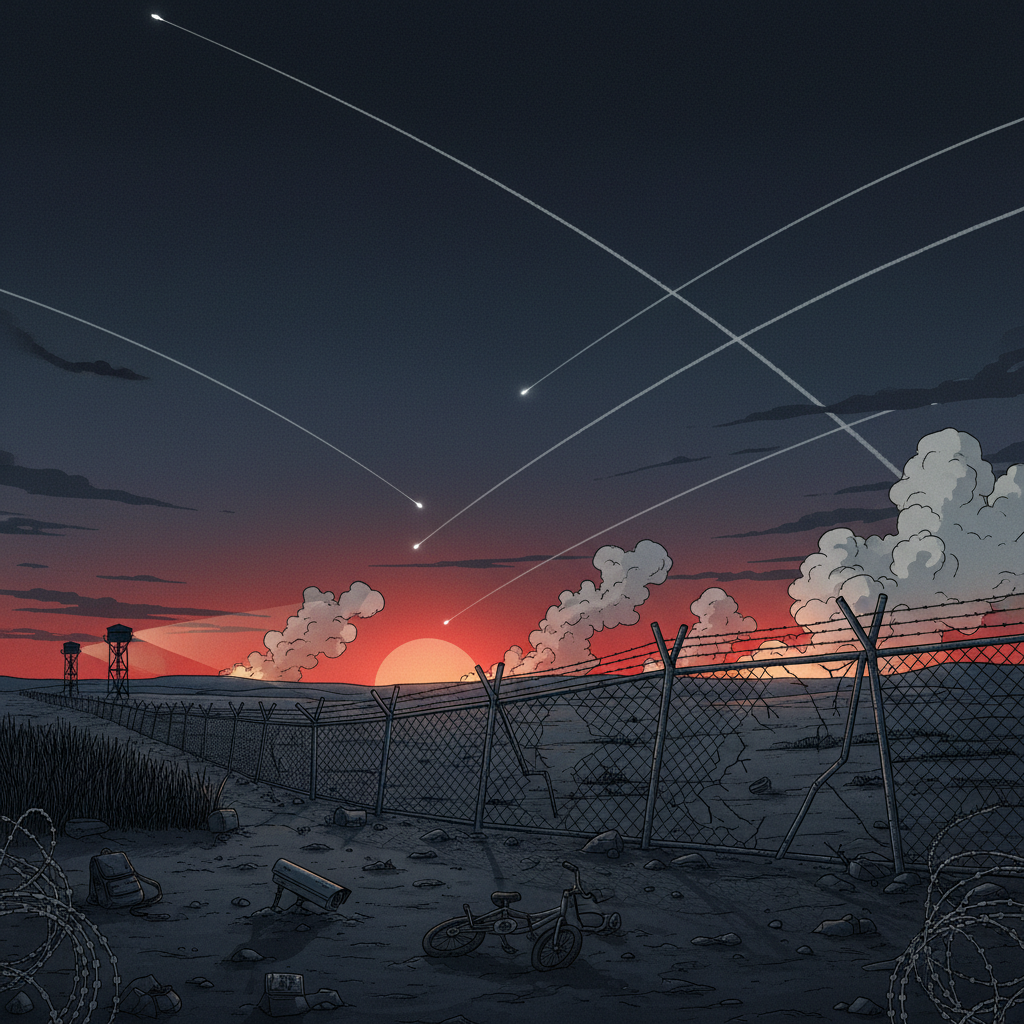
10月7日ハマス攻撃
On October 7, 2023, Hamas launched a surprise multi-front assault on southern Israel from the Gaza Strip, killing approximately 1,200 people and taking over 250 hostages. The attack triggered Israel's largest military operation in Gaza since 1948, a broader regional escalation involving Hezbollah and Iran, and ultimately contributed to the US-Israel strikes on Iran in February-March 2026. The event represents a catalyst whose causal chain extends from the immediate attack through the Gaza war, regional proxy conflict, and into the reshaping of the Middle Eastern security architecture.
エグゼクティブサマリー
Seven lenses converge on a central finding: October 7 was a catalyst event whose consequences far exceeded the intentions of any single actor, triggering an escalation chain that reshaped the Middle Eastern security architecture. Intelligence lenses (regional-intelligence, CIA) identify a systemic analytical failure rooted in technological hubris. The proxy-warfare lens reveals how Hamas's autonomous action within Iran's proxy framework ultimately destroyed the very proxy doctrine it exemplified. Civilian-impact documents a humanitarian catastrophe of historic proportions on both sides, with radically asymmetric scale. Game-theory exposes the escalation trap where each player's rational response drove the system toward collective catastrophe. Machiavelli strips away stated justifications to reveal the gap between declared and actual objectives for all parties. Nietzsche diagnoses the psychological dynamics of ressentiment (ルサンチマン) and will to power (力への意志) that underpin the conflict's intensity. Together, these perspectives reveal October 7 not as an isolated attack but as the moment when decades of unresolved tension, strategic miscalculation, and human suffering converged into a rupture whose consequences -- extending through Gaza's destruction, Hezbollah's degradation, and the US-Iran 2026 strikes -- continue to unfold.
重要な事実
複数のソースからの検証済み事実、確信度レベルで評価
Hamas launched Operation Al-Aqsa Flood on October 7, 2023, breaching the Gaza-Israel barrier at multiple points with approximately 3,000 militants.
highの確信度Approximately 1,200 people were killed in Israel on October 7, including 364 at the Nova music festival, approximately 695 Israeli civilians, 373 security forces, and 71 foreign nationals.
highの確信度Over 250 hostages were taken to Gaza, including Israeli soldiers, civilians, and foreign nationals.
highの確信度Israel launched Operation Swords of Iron on October 8, 2023, beginning an intensive aerial bombardment campaign followed by a ground invasion of northern Gaza on October 27.
highの確信度The ICC issued arrest warrants for Israeli PM Netanyahu and Hamas leader Yahya Sinwar (and others) for alleged war crimes and crimes against humanity.
highの確信度The ICJ ordered provisional measures in South Africa's genocide case against Israel, ruling that Palestinians in Gaza have plausible rights under the Genocide Convention that needed protection.
highの確信度Hezbollah began cross-border attacks on Israel on October 8, 2023, opening a second front in solidarity with Hamas, escalating to a full-scale conflict by late 2024.
highの確信度主要アクター
このイベントに関与する主要アクターとその行動および表明された利益
Hamas (Izz ad-Din al-Qassam Brigades)
organization- ›Launched coordinated multi-front assault on southern Israel
- ›Breached Gaza-Israel barrier at 30+ points
- ›Attacked military bases, kibbutzim, and Nova music festival
Israel (Government and IDF)
state- ›Declared war and mobilized 360,000 reservists
- ›Launched Operation Swords of Iron air campaign
- ›Imposed total siege on Gaza (fuel, electricity, water, food)
Iran / IRGC
state- ›Provided long-term strategic and financial support to Hamas
- ›Supplied weapons technology and training through IRGC Quds Force
- ›Coordinated Axis of Resistance response across multiple fronts
Hezbollah
organization- ›Opened second front with cross-border attacks on northern Israel
- ›Launched rockets and anti-tank missiles at Israeli positions
- ›Escalated to major conflict by late 2024
United States
state- ›Deployed two carrier strike groups to Eastern Mediterranean
- ›Provided emergency military aid packages to Israel
- ›Vetoed multiple UN Security Council ceasefire resolutions
リサーチとソース
イベントタイムライン
2023-10-07 to ongoing (2026-03-15)
因果分析
政策、アクター、イベントが因果的にどのように結びついているかを示すインタラクティブグラフ。ノードをクリックして関係を探索できます。
因果ネットワーク
17ノード · 16接続
ノードを選択
グラフ内の任意のノードをクリックして、接続とレンズの視点を探索してください
根本原因
4クリティカルパス
9ステップレンズ分析
各レンズは独自の分析フレームワークを提供します。クリックして深い分析を展開してください。
地域情報パースペクティブ
regional-intelligenceOctober 7 represents a textbook case of intelligence failure driven by analytical hubris -- the belief that technological superiority and economic leverage had permanently deterred Hamas. The failure was not primarily one of collection (indicators existed) but of analysis and institutional culture, where a dominant framework became unfalsifiable. The most significant intelligence lesson is that a disciplined adversary willing to accept the costs of low-tech communication can defeat the world's most sophisticated SIGINT apparatus.
代理戦争と非国家主体ドクトリン
proxy-warfareOctober 7 exposed the central paradox of proxy warfare: proxies are valued for their operational autonomy and deniability, but that same autonomy means they can drag their patron into conflicts the proxy strategy was designed to prevent. Iran built the most sophisticated state-sponsored proxy network in modern history, only to see it become the mechanism through which Iran was drawn into direct military confrontation with the US and Israel -- the very outcome four decades of proxy doctrine was designed to avoid.
民間人口影響分析
civilian-impactThe civilian impact of October 7 and the subsequent Gaza operation is characterized by radical asymmetry in scale alongside shared human suffering. While October 7 inflicted devastating, concentrated violence on Israeli communities in a single day, the sustained military operation in Gaza has produced civilian casualties, displacement, and infrastructure destruction at a scale that multiple UN agencies describe as unprecedented in modern conflict. The population-level data -- regardless of which source's figures one accepts -- describes a humanitarian catastrophe whose demographic, psychological, and economic consequences will shape the region for a generation.
CIA戦略情報評価
Western InstitutionalciaFrom a US strategic intelligence perspective, October 7 triggered the most consequential unplanned escalation chain since 9/11. The CIA's analytical frameworks correctly identified the escalation dynamics -- proxy degradation leading to nuclear hedging leading to preventive strikes -- but the political environment constrained the policy options for interrupting this chain. The key intelligence lesson is that a single dramatic event can collapse carefully constructed strategic frameworks (normalization, containment) faster than they can be rebuilt.
ゲーム理論分析
Western Moderngame-theoryGame theory reveals October 7 as a rational (if catastrophic) move within Hamas's strategic calculus: the pre-existing equilibrium was deteriorating for Palestinian interests, Israel's deterrence model had created exploitable overconfidence, and the expected payoff of dramatic disruption exceeded continued marginalization. The resulting escalation trap -- where each player's rational response to the previous move drives the system toward collective catastrophe -- demonstrates why the most dangerous moments in international security arise when multiple players simultaneously face commitment traps that foreclose de-escalation.
マキャヴェリ的権力分析
Greco-Roman & ClassicalmachiavelliThrough a Machiavellian lens, October 7 reveals a conflict where every major actor's stated goals diverge significantly from their inferred real goals, and where the weakest actor's willingness to pay the highest price gave it disproportionate power to reshape the strategic landscape. Hamas traded its physical capacity for strategic disruption; Israel traded international legitimacy for military dominance; Iran traded its proxy network for nuclear leverage; the US traded diplomatic credibility for alliance maintenance. The Prince would observe that all parties achieved something, but none achieved what they claimed to want.
ニーチェ的力への意志分析
Western ModernnietzscheThrough Nietzsche's lens, October 7 reveals a conflict driven not by rational strategic calculation but by the collision of competing expressions of will to power (力への意志) -- Hamas's ressentiment (ルサンチマン) erupting as destructive nihilism, Israel's master morality reasserting dominance through overwhelming force, and both sides trapped in what Nietzsche would diagnose as reactive rather than creative expressions of will. The tragedy is that no party in this conflict is exercising will to power (力への意志) in its highest form -- the creation of new values and possibilities. All are destroying, negating, reacting. The abyss has consumed every party that gazed into it.
収束点
複数のレンズが類似した結論に達する箇所。堅牢性を示唆しています。
Intelligence failure rooted in systemic analytical hubris, not collection gaps
All three lenses agree that October 7's intelligence failure was primarily analytical rather than collection-based. Warning indicators existed but were filtered through institutional frameworks that had concluded Hamas was deterred. The regional-intelligence lens traces this to the 1973 'conceptzia' pattern recurring; the CIA lens identifies a broader failure of the US-Israeli intelligence partnership; game-theory shows how Israel's false model of Hamas's preferences created exploitable strategic overconfidence.
The escalation chain from October 7 to US-Iran strikes was structurally predictable even if not inevitable
Four lenses converge on the assessment that the escalation from proxy attack through proxy network destruction to direct state confrontation follows a recognizable structural pattern. Proxy-warfare identifies the fundamental paradox of proxy doctrine (proxies can drag patrons into unwanted confrontation); CIA traces the strategic logic from deterrence degradation to nuclear hedging to preventive strikes; game-theory models the commitment traps that foreclosed de-escalation; Machiavelli identifies how each actor's pursuit of stated goals (which concealed real goals) drove escalation.
All actors' stated goals diverge significantly from their inferred real goals
Machiavelli and game-theory both identify systematic gaps between declared and actual objectives for all parties. Hamas claimed liberation but sought Abraham Accords disruption and strategic repositioning. Israel claimed hostage rescue but prioritized deterrence restoration and regime survival. Iran claimed Palestinian solidarity but pursued proxy network maintenance and nuclear leverage. The US claimed stability but prioritized alliance credibility and Iran containment.
The weakest actor's willingness to accept maximum costs gave it disproportionate strategic agency
Game-theory identifies Hamas's asymmetric payoff structure (strategic repositioning worth catastrophic military losses); Machiavelli notes that willingness to pay the highest price inverted conventional power dynamics; Nietzsche frames this as the explosive discharge of ressentiment (ルサンチマン) that temporarily reversed the master-slave dynamic. All three recognize that Hamas's acceptance of devastating consequences for Gaza enabled strategic outcomes that a conventionally rational actor would not have pursued.
生産的な緊張
レンズが意見を異にする箇所。検討に値する複雑さを明らかにしています。
起こりうる未来
レンズ分析から導出されたシナリオ。異なるフレームワークに基づいて何が展開するかもしれないか。
Managed Post-Conflict Equilibrium
Low-medium probability (20-30%). Requires simultaneous progress on multiple intractable issues. Historical precedent (post-1973, post-Oslo) suggests partial progress followed by breakdown.
Frozen Conflict with Periodic Eruption
High probability (40-50%). Most consistent with historical patterns. The Israeli-Palestinian conflict has repeatedly entered periods of reduced violence without resolution, with each cycle producing greater devastation than the last.
Regional Realignment and Arab-Israeli Normalization
Medium probability (25-35%). The degradation of Iran's proxy network and the exhaustion of the conflict may create a window for normalization, but the depth of Palestinian suffering makes any deal that marginalizes Palestinian statehood politically toxic.
Continued Escalation and Regional War
Low probability (10-15%). The 2026 strikes have degraded Iran's conventional capabilities, but asymmetric retaliation (terrorism, cyber, proxy reconstitution) remains possible. Full regional war is unlikely given the military imbalance.
主要な問い
分析後も残る未解決の問い。継続的な探求のために。
- ?What was the full extent of pre-October 7 intelligence warnings, and at what levels were they received and dismissed?
- ?What was the precise degree of Iranian foreknowledge and involvement in October 7 operational planning?
- ?What is the accurate civilian-to-combatant casualty ratio in Gaza, and can it be independently verified?
- ?What was the content of Saudi-Israeli normalization negotiations at the time of October 7?
ファクトチェック詳細
ファクトチェック結果
verifiedメタ観察
No lens adequately captures the experience of the individual human beings at the center of this conflict -- the October 7 survivors, the hostage families, the children of Gaza, the soldiers on both sides. All seven lenses analyze the conflict from above or outside; none can convey what it means to live inside it. Additionally, none adequately addresses the religious dimensions that motivate many actors -- Islamic theology, Jewish historical consciousness, messianic nationalism -- which resist secular analytical frameworks.
This conflict resists reduction to any single explanatory framework because it operates simultaneously as an intelligence failure, a proxy warfare crisis, a humanitarian catastrophe, a strategic escalation chain, a power politics game, and a psychological drama of collective trauma and will to power (力への意志). Any analysis that privileges one dimension necessarily distorts the whole. The seven lenses together approach but do not achieve a complete picture.
This analysis was produced by an AI system analyzing one of the most emotionally charged, politically contested, and humanly devastating events of the 21st century. The multi-perspective framing is designed to present all major viewpoints with attribution, but no analysis of this event can be truly neutral. The reader is encouraged to notice which perspectives resonate and which provoke resistance, and to treat that response as data about their own analytical framework rather than evidence of the analysis's bias.
あなたの視点を見つける
異なるフレームワークは異なる読者に響きます。あなたの入口を見つけてください。
Readers who approach conflict through strategic logic, institutional analysis, and rational actor frameworks. You likely focus on what actors could and should have done differently, and you evaluate outcomes against strategic objectives.
October 7 was a predictable consequence of Israeli analytical hubris and a rational (if extreme) strategic move by Hamas. The escalation chain follows recognizable patterns from intelligence failure through commitment trap to regional confrontation.
Readers who experience this conflict through its human and psychological dimensions first. You are drawn to the suffering of civilian populations and the deeper psychological forces driving the violence. You may find purely strategic analysis emotionally unsatisfying or morally insufficient.
The conflict is driven by deep psychological forces (ressentiment (ルサンチマン), will to power (力への意志), collective trauma) that cannot be resolved through strategic frameworks alone. The civilian cost is the central reality that all other analyses must reckon with.
Readers who understand conflict through institutional structures, alliance dynamics, and great power competition. You focus on how organizations (intelligence agencies, proxy networks, alliances) shape and constrain individual and state behavior.
October 7 was a failure of institutional structures -- intelligence organizations, proxy management doctrines, alliance mechanisms -- that had maintained a fragile status quo for decades. The institutional framework failed because it was designed for a world that the actors had already moved beyond.
Readers skeptical of stated motivations and official narratives. You suspect that all parties are pursuing unstated objectives disguised as moral imperatives, and you evaluate claims against revealed preferences rather than declared intentions.
Every major actor's stated goals diverge from their inferred real goals. The gap between stated and actual objectives -- not the objectives themselves -- is the primary driver of the conflict's intractability.
If you find yourself strongly aligned with one cluster, deliberately engage with the opposite. If you resonate with the analytical cluster's strategic logic, the intuitive cluster's focus on civilian suffering will challenge your framework in productive ways. If the institutional perspective feels natural, the Machiavellian skepticism about stated objectives will deepen your analysis. Every perspective here captures something real and misses something important.
関連分析
類似のレンズやカテゴリーを通して分析された他のイベント
アラブの春は2010年12月からアラブ世界を席巻いた抵抗運動、蜂起、武装反乱の革命的な波であった。2010年12月17日にチュニジアの路上販売人モハメド・ブアジジの焼身自殺が引き金となった。「الشعب يريد إسقاط النظام」(人民は体制の崩壊を望む)というスローガンがチュニスからカイロ、ベンガジからダマスカスまで響き渡った。軍の選択——デモ参加者の側につくか体制に忠誠であり続けるか——が各国で決定的な変数となった。
1994年4月6日から7月18日の間に、ルワンダで約80万人のツチ族と穏健派フツ族が100日間で組織的に殺害されました——近代史上最も効率的な大量殺戴であり、ホロコーストを上回る1日あたりの死亡率でした。このジェノサイドは「古代の部族間憾恶」の爆発ではなく、植民地計画の破滅的結末でした:ベルギーの管理者たちは1933年の国勢調査と義務的な民族身分証明書を通じて、流動的な社会的アイデンティティから硬直的な人種カテゴリーを製造しました。RTLMラジオ——「ラジオ・マシェテ」——は何年もの非人間化プロパガンダを通じて体系的に住民を条件付けしました。25万人から50万人の女性がジェノサイドの意図的な武器として強姦されました。国際社会の失敗は受動的ではなく能動的でした:ダレールは3か月前に警告を送り、5,000人の兵士を要請し、拒否されました。RPFの軍事的勝利は1994年7月にジェノサイドを終結させましたが、余波は第一次コンゴ戦争(1996-97)と500万人以上が死亡した「アフリカの世界大戦」に波及しました。
1986年4月26日午前1時23分、ウクライナ・ソビエト社会主義共和国のチェルノブイリ原子力発電所4号炉が安全試験中に爆発し、広島原爆の400倍の放射性物質を放出した。ソ連当局は当初この大惨事を隠蔽し、プリピャチの住民49,000人に36時間にわたり通常の生活を続けさせた。約60万人の「リクビダートル(除染作業員)」が動員された。死亡者数の推定はWHOの4,000人からグリーンピースの93,000人まで幅がある。この惨事はソ連の技術的優位という神話を打ち砕き、ゴルバチョフにグラスノスチを余儀なくさせた。
この分析の方法
分析プロセス、ツール、および限界についての完全な透明性
Crosslightエンジン
v0.4.0 "Global Lens Expansion"- ⚠Non-Western philosophical lenses rely on translated primary texts — nuance may be lost in translation
- ⚠Some traditions (e.g., Maat, Ubuntu) have limited surviving primary texts; analysis draws on scholarly reconstruction
- ⚠Cross-cultural lens application is inherently interpretive — a Confucian reading of a Western event is an analytical exercise, not a claim of cultural authority
分析統計
方法論
この分析はCrosslightマルチエージェントパイプラインによって生成されました。リサーチエージェントが複数のソースから事実を収集・検証し、専門化されたレンズエージェントが個別の分析フレームワークを適用し、統合エージェントが洞察を統合してパターンを特定し、ファクトチェックエージェントが主張を検証しました。各レンズの視点はAIによる解釈であり、機関としての推薦ではありません。詳しく見る →